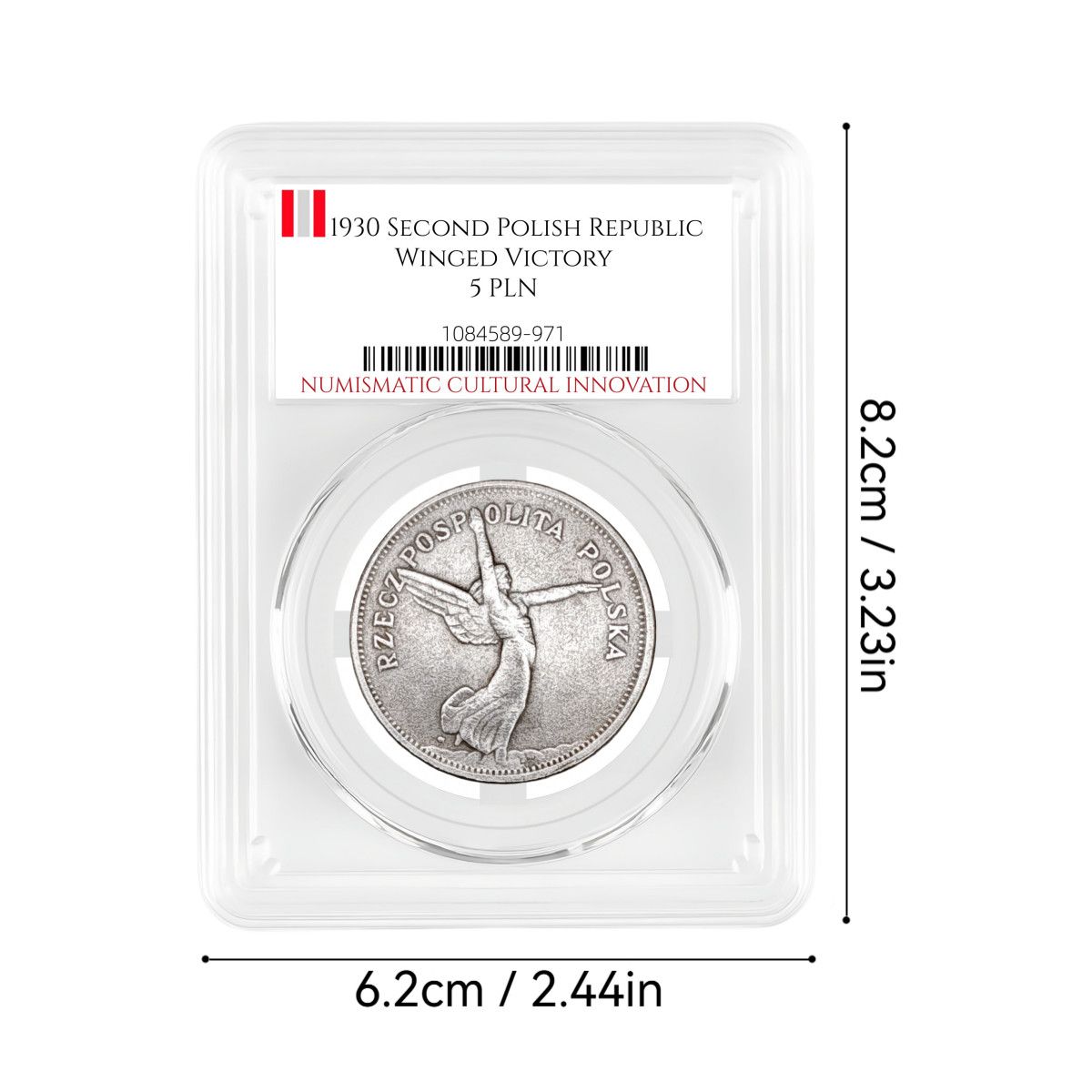
1930 Second Polish Republic Winged Victory 5 PLN
1930 Second Polish Republic Winged Victory 5 PLN
Couldn't load pickup availability
Product Overview
This 1930 5 Złoty coin from the Second Polish Republic is one of Poland’s most iconic interwar-era silver issues. Featuring the Winged Victory (Nike) design, it represents national strength, independence, and the cultural revival of Poland between World War I and World War II.
Historical Background
After regaining independence in 1918, the Second Polish Republic began rebuilding its economy and national identity. By the 1930s, Poland introduced beautifully designed coinage reflecting classical European artistic influences and strong national symbolism.
The Winged Victory motif was widely used to express triumph, freedom, and the resilience of the Polish state during a period of modernization and political consolidation.
Design Features
The obverse typically features the denomination “5 Złotych” along with national inscriptions of the Second Polish Republic.
The reverse showcases the Winged Victory (Nike), often depicted with outstretched wings, symbolizing triumph, protection, and national pride.
The design is highly detailed, combining neoclassical artistry with strong patriotic symbolism.
Collectible Value
This coin is highly regarded among collectors of European interwar coinage. Its artistic design, silver content, and historical context make it one of the most desirable Polish coins from the early 20th century.
Well-preserved examples are especially sought after due to limited survival in high-grade condition.
Key Features
- · Issued in 1930 during the Second Polish Republic
- · Features Winged Victory (Nike) design
- · Classic interwar European silver coin
- · Strong national and historical symbolism
- · Highly collectible Polish numismatic piece
Ideal For
- · Polish coin collectors
- · Interwar European history enthusiasts
- · Silver coin collectors
- · Classical and neoclassical design collectors
Condition Note
As a vintage silver coin, natural toning, light wear, and surface marks may be present. These characteristics are typical for circulation-era pieces and add to its authenticity and historical character.